
When it’s windy, your short game strategy needs to change. Wind impacts ball flight, spin, and rollout, requiring adjustments in club selection, ball position, and shot technique. Here’s what you need to know:
- Headwinds: Reduce carry distance (10–12 yards with a 10 mph wind), increase spin, and cause ballooning. Use 1–2 extra clubs, swing easier, and keep shots low.
- Tailwinds: Add distance (0.5 yards per 1 mph wind) but reduce spin, leading to more rollout. Use less club and land shots shorter than usual.
- Crosswinds: Push the ball off course, affecting both full shots and putts (e.g., a 9 mph wind moves a 10-foot putt by 14 inches). Adjust your aim and strike putts firmly.
Key techniques include playing knock-down shots to lower trajectory and adjusting your stance for better control. Drills like the motorcycle drill and punch shot practice can help refine these skills. The takeaway? Don’t fight the wind – work with it to maintain precision and control.
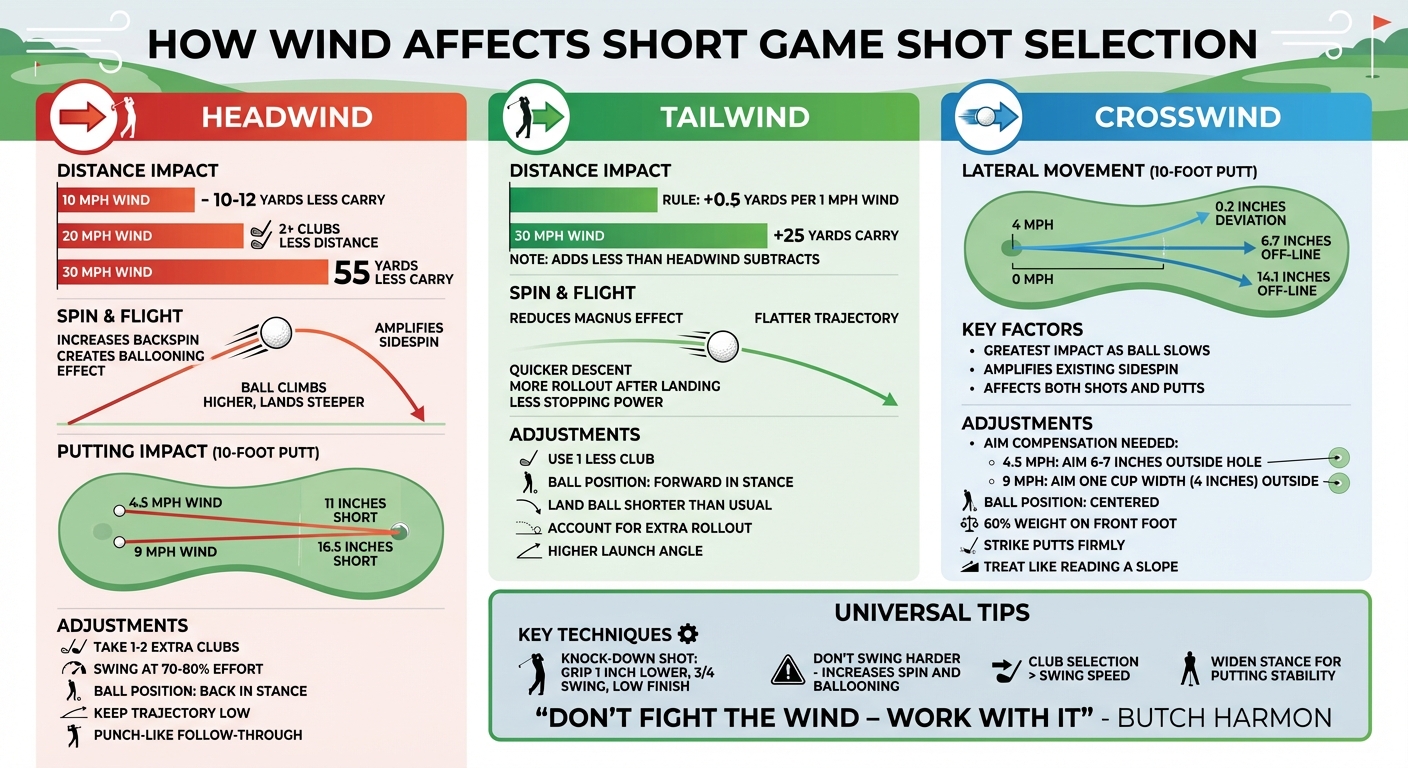
How Wind Direction Affects Golf Short Game Shots
IMPROVE YOUR SHORT GAME IN THE WIND
sbb-itb-bcd8bdd
How Wind Changes Ball Flight and Control
Understanding how wind affects ball flight is crucial for making smarter decisions on the course, especially around the green. Each wind direction – headwinds, tailwinds, and crosswinds – affects ball behavior differently, demanding specific adjustments in technique and club selection.
Headwinds: Shorter Distance and Increased Spin
Hitting into a headwind introduces a lot of resistance. The stronger the wind, the more it magnifies aerodynamic forces. For example, a 10 mph headwind can cut your carry distance by 10–12 yards with a mid-iron, while a 20 mph wind can cost you over two clubs’ worth of distance.
But it’s not just about distance. Headwinds also create a ballooning effect – increased lift and backspin cause the ball to climb higher and land at a steeper angle. This can make your pitch shots fall short, even if they land softly. Additionally, headwinds amplify any sidespin, so small fades or draws become exaggerated. Even putting drills show that putts are affected: a 4.5 mph headwind can leave a 10-foot putt 11 inches short, while a 9 mph headwind leaves it 16.5 inches short.
To counter headwinds, take 1–2 extra clubs and swing at about 70–80% effort. Swinging harder generates more spin, which worsens the ballooning effect. Position the ball slightly back in your stance and finish with a low, punch-like follow-through to keep the trajectory lower.
Tailwinds: Longer Carry, Less Spin
With a tailwind, the ball feels less airflow, reducing the Magnus effect that helps it stay airborne. The result? A flatter trajectory and a quicker descent. A 30 mph tailwind can add roughly 25 yards of carry, but the trade-off is reduced stopping power. The ball lands with more forward momentum and rolls farther than usual. A helpful rule of thumb: add 0.5 yards of carry for every 1 mph of tailwind.
Interestingly, headwinds reduce distance more than tailwinds increase it. For instance, a 30 mph headwind can cut carry by 55 yards, while the same tailwind adds only 25 yards. As golf instructor Dale Abraham clarifies:
“It’s a common misconception that the ball spins more when hit into the wind. It’s actually the added lift when hit into the airflow that gives this false impression.” – Dale Abraham
For short game shots with a tailwind, use one less club and play the ball slightly forward in your stance to achieve a higher launch angle.
Crosswinds: Sideways Movement and Adjustments
Crosswinds are especially tricky, as they push your ball off course when precision matters most. Research shows that a 4.5 mph crosswind can move a 10-foot putt 6.7 inches offline, while a 9 mph crosswind increases that deviation to 14.1 inches.
The challenge becomes even greater when a crosswind includes a headwind component. Since aerodynamic forces increase with the square of airspeed, existing sidespin is amplified. As Dave Tutelman explains:
“Into the wind, with the increased wind speed relative to the ball, the hook or slice will increase… With the wind, with the decreased wind speed relative to the ball, the hook or slice will decrease.” – Dave Tutelman
Lou Stagner also highlights that wind exerts its greatest influence as the ball slows down:
“The wind caused balls to start curving just as they began to lose speed. This means that even if your putt starts on the correct line, a crosswind can nudge it offline right before it stops.” – Lou Stagner
Treat crosswinds like reading a slope on the green. For example, in a 9 mph crosswind on a 10-foot putt, aim about one cup width (4 inches) outside the hole. Additionally, give your putts enough speed to minimize the time they spend rolling slowly, as they’re most vulnerable to wind at lower speeds.
| Wind Speed | Lateral Deviation (10ft Putt) | Compensation Needed |
|---|---|---|
| 0 mph | ~0.2 inches | Negligible |
| ~4.5 mph | 6.7 inches | Aim 6–7 inches outside hole |
| ~9 mph | 14.1 inches | Aim one cup width outside hole |
How to Adjust Short Game Shots in Wind
When playing in windy conditions, tweaking your short game technique is key to maintaining control. Start by adjusting your ball position based on the wind direction. For headwinds, position the ball farther back in your stance. For tailwinds, move it forward. In crosswinds, keep the ball centered but shift about 60% of your weight to your front foot. These adjustments help create a low, controlled trajectory that’s less affected by the wind’s force. For tailwinds, slightly tilt your shoulders upward during setup to add height, letting the wind carry the ball farther. These stance changes lay the groundwork for smart club selection and swing adjustments.
Club Selection Over Swing Speed
In windy conditions, club selection takes priority over swing speed. As Kellie Stenzel advises, “A great choice in the wind is to take a little extra club and make a smaller swing. A good barometer is about three-quarters”. Swinging harder into a headwind only increases backspin, causing the ball to balloon. Instead, take 1–2 extra clubs and swing at about 75–80% of your usual effort. For tailwinds, club down and account for extra rollout by landing the ball short of your target. In crosswinds, keep your ball position centered, shift 60% of your weight forward, and adjust your aim slightly into the wind. Smart club choices naturally pave the way for refining swing techniques, such as the knock-down shot.
The Knock-Down Setup for Windy Conditions
The knock-down shot helps lower your ball’s trajectory, giving you better control. To execute this, grip the club about an inch lower to shorten your swing radius. Lean your upper body slightly toward the target and use a three-quarter swing, finishing with a “punch finish” – keeping your hands low through the follow-through. This technique reduces loft, keeping the ball below the wind and ensuring a more consistent flight. If you’re playing the ball farther back in your stance, drop your front foot slightly behind to realign your shoulders, making it easier to keep your weight forward.
Adjusting Your Putting in the Wind
Wind affects putts just as much as full shots, so refining your best putting technique is crucial. Widen your stance to improve balance against gusts. Strike the ball firmer into a headwind, while using a softer touch when putting downwind. For crosswinds, account for drift. For example, on a 10-foot putt with a 9 mph crosswind, aim about one cup-width (4 inches) outside the hole. To counteract the wind’s influence, give your putts enough speed to minimize the time the ball spends rolling slowly, as it’s most vulnerable to wind at lower speeds.
Drills for Playing Short Game Shots in Wind
When it’s breezy, adjusting your swing is key. These golf drills are designed to help you develop the muscle memory needed for low, controlled shots that cut through the wind. By focusing on trajectory, clean contact, and landing adjustments, you can improve your scoring even in challenging conditions.
Low-Trajectory Chip Shot Drill
The motorcycle drill is perfect for dialing in low-flying chip shots. The idea is to flex your lead wrist into a bowed position – similar to revving a motorcycle – during the downswing. This motion reduces the club’s dynamic loft, keeping the ball flight low and preventing it from ballooning into the wind. Golf professional Britt Olizarowicz emphasizes:
“A slightly flexed lead wrist at impact lowers flight and kills ‘ballooning.’” – Britt Olizarowicz
Here’s how to practice it:

- Hit 10 chips with your usual swing.
- Then, switch to a pitching wedge or 8-iron and focus on maintaining that bowed wrist through impact.
For clean contact, place a tee or draw a line just ahead of the ball. Aim to strike the ball first, then the ground. This drill not only sharpens your wrist action but also ensures you’re making solid, controlled contact – critical when the wind is in play.
Punch Shot Drill for Wind
When it comes to windy conditions, a punch shot can be your best friend. The 50-yard target drill helps you perfect this shot. Here’s what to do:
- Choose a target 50 yards away.
- Use a 6-iron or 7-iron and position the ball slightly back in your stance.
- Choke down about an inch on the club.
- Keep your backswing compact and finish with your hands below shoulder height.
The goal isn’t about hitting far – it’s about keeping the ball flight low and controlled. Experiment with ball position to find the trajectory that works best for you. This drill trains you to manage the wind by controlling the height and path of your shots.
Landing Spot Adjustment Drill
Wind doesn’t just affect ball flight – it changes how the ball rolls out after landing. To practice this, set up three targets at 20, 30, and 40 yards using alignment sticks or towels. Here’s how to approach it:
- Hit five chips to each target with a pitching wedge, focusing on where the ball lands versus where it stops.
- For headwinds, aim to land the ball closer to the pin, accounting for less rollout.
- For tailwinds, land the ball 5–10 feet shorter than usual and watch how the extra rollout plays out.
Even on calm days, you can simulate crosswinds by using alignment sticks to create imaginary start lines. Practice aiming away from the target and letting the “wind” bring the ball back. This drill sharpens your ability to adjust for varying wind conditions, helping you maintain consistent distance control on the course.
Conclusion
Wind doesn’t have to derail your short game – it just requires a smarter approach to shot selection. By tweaking ball height, spin, and direction, you can adapt to the conditions. For instance, headwinds cause the ball to balloon and stop quickly, while tailwinds flatten the flight and increase rollout. Even crosswinds can significantly affect your game, pushing a 10-foot putt over 14 inches off-line in just 9 mph of wind.
Instead of fighting the wind, work with it. As Butch Harmon wisely says:
“The players who get it done in the wind are the ones who don’t try to fight it”.
Focus on controlling your trajectory. Club up, keep the ball low, and adjust your stance – move the ball slightly back and use less-lofted clubs for chips. And sometimes, it’s okay to accept par when the wind is challenging.
What sets skilled wind players apart is their willingness to quickly improve your golf game by practicing in tough conditions. Don’t skip the range on windy days; use them as an opportunity to understand how your wedges behave in real gusts. Drills like the motorcycle and landing spot adjustments help you develop the feel and confidence needed to make smart decisions when the wind picks up.
FAQs
How do I judge wind at green level?
When assessing wind at green level, pay attention to how it interacts with loose items, flags, or even the ball during your practice strokes. Even a moderate breeze can influence the ball’s direction or how it rolls. A good way to gauge this is by rolling a few putts to see if the wind causes consistent drift or slows the ball down. Understanding these subtle effects allows you to fine-tune your approach and aim more precisely.
Which short game shots are safest in heavy wind?
In strong winds, it’s best to stick with short game shots that have a lower trajectory, such as punch or knockdown shots. These types of shots reduce the wind’s influence, giving you more control and precision.
How do I adjust for gusty (changing) wind?
When dealing with gusty wind, it’s important to consider its variability, direction, and strength. Strong gusts can significantly affect both the distance and direction of your shot. Here are a few practical tips to manage wind during your game:
- Use more club for headwinds: When hitting into the wind, the extra club helps counteract the resistance and ensures your shot reaches the target.
- Use less club for tailwinds: With the wind at your back, the ball will travel farther, so adjust accordingly.
- Shape shots into the wind: Controlling your ball flight by shaping it into the wind can provide better stability and accuracy.
- Hit lower-flighted shots: Keeping the ball flight low minimizes the wind’s influence, giving you more control.
Always stay alert to wind changes and adjust your strategy to select shots that can handle gusts effectively.

Leave a Reply