Introduction to Putting
Putting is one of the most crucial aspects of golf, and it can make or break your game. A good putter can save you from a bad shot, while a poor putter can turn a good shot into a disaster. As a mid-handicap golfer, it's essential to focus on improving your putting skills to lower your score. In this article, we'll discuss the key elements of a good putting stroke, including stance, grip, and alignment. We'll also provide you with some practical drills to help you improve your putting.
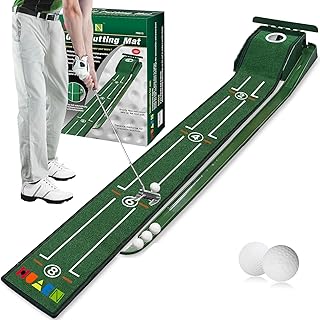
Before we dive into the details, let's talk about the importance of practice. As the saying goes, "practice makes perfect," and this is especially true when it comes to putting. You can't just show up on the course and expect to make putts without putting in the time to practice. We recommend practicing your putting at home using a golf putting mat Golf Putting Mat →. This will help you develop a consistent stroke and build your confidence on the green.
In addition to practice, it's also important to have the right mindset when it comes to putting. You need to be focused and calm, with a clear mind and a steady hand. This is where visualization techniques can come in handy. Close your eyes and imagine yourself making the putt. Visualize the ball going into the hole, and feel the sense of confidence and satisfaction that comes with it. This can help you stay calm under pressure and make more putts.
Stroke Technique
A good putting stroke is all about consistency and control. You want to make sure that your stroke is smooth and consistent, with a steady pace and a solid finish. To achieve this, you need to pay attention to your stance, grip, and alignment. Make sure your feet are shoulder-width apart, with your weight evenly distributed between both feet. Your grip should be firm but not too tight, with your hands positioned equally on the club.
When it comes to alignment, make sure your putter is facing directly at the target, with your eyes over the ball. Take a few practice strokes to get a feel for the pace and direction of the putt. As you make your stroke, keep your head still and your eyes focused on the ball. Avoid twisting or turning your body, as this can disrupt your stroke and cause you to miss the putt.
Another important aspect of stroke technique is the follow-through. After you make your stroke, keep your putter moving in a smooth, consistent motion. Avoid jerking or twisting the club, as this can cause the ball to veer off course. Instead, focus on keeping the club moving in a straight line, with a steady pace and a solid finish.
Green Reading
Green reading is the art of determining the direction and speed of a putt. It's a crucial aspect of putting, as it can make all the difference between making and missing a putt. To become a good green reader, you need to develop your ability to read the grain and slope of the green. Look for the direction of the grain, as well as any slopes or breaks in the green. Use this information to determine the direction and speed of the putt.
One technique for green reading is to use the AimPoint method. This involves aiming directly at the target, while taking into account the slope and grain of the green. You can also use visualization techniques to imagine the ball rolling into the hole. Close your eyes and picture the ball following the predicted path, taking into account any breaks or slopes in the green.
As you become more experienced, you'll develop your own system for green reading. You may find that you prefer to use a combination of techniques, such as the AimPoint method and visualization. The key is to find a system that works for you and to practice it consistently.
Distance Control
Distance control is critical when it comes to putting. You need to be able to gauge the speed and distance of the putt, taking into account the slope and grain of the green. To develop your distance control, practice putting from different distances and slopes. Start with short putts and gradually work your way up to longer ones, paying attention to the pace and direction of the ball.
One technique for developing distance control is to use a metronome or a timer. This will help you develop a consistent pace and rhythm, which is essential for accurate putting. You can also practice putting with different speeds and directions, such as uphill or downhill putts.
As you practice, pay attention to the feedback you receive from the ball. If the ball is consistently rolling too far or not far enough, adjust your stroke accordingly. You may need to make adjustments to your grip, stance, or alignment to achieve the desired speed and direction.
Pre-Putt Routine
\"A pre-putt routine can help you stay focused and calm, even under pressure. It's a way to clear your mind and prepare yourself for the shot, and it can make all the difference between making and missing a putt.\"
A pre-putt routine is a series of steps you take before making a putt. It can include actions such as taking a few deep breaths, visualizing the ball going into the hole, or aligning your feet and shoulders with the target. The key is to find a routine that works for you and to practice it consistently.
To develop a pre-putt routine, start by identifying the actions that help you feel most calm and focused. You may find that taking a few deep breaths or visualizing the ball going into the hole helps you stay relaxed and composed. Experiment with different routines until you find one that works for you, and practice it consistently to achieve the best results.
⛳ Related Gear
Gear worth checking out for mid-handicap golfers: