Improve your lag putting with these tips and drills to reduce three-putts
Introduction to Lag Putting
So, you're looking to improve your lag putting, huh? Well, you're in the right place. Lag putting is all about controlling the speed and direction of your putts, especially on those longer putts where you're not trying to make the hole, but just get it close enough for a tap-in. It's a crucial part of the game, and can really make or break your score. I mean, think about it, if you can't get your putts close to the hole, you're going to be three-putting all day, and that's just frustrating. So, let's dive into some tips and drills to help you improve your lag putting.
First of all, it's essential to understand that lag putting is all about feel and control. You need to be able to judge the speed of the green and the break of the putt, and then make a smooth, controlled stroke to get the ball rolling at the right pace. It's not just about hitting the ball hard and hoping for the best, it's about finesse and precision. And, let's be honest, it's not always easy. I mean, we've all been there, standing over a long putt, trying to judge the speed and break, and just hoping that we don't leave it too far away from the hole.
But, with practice and patience, you can develop the skills you need to become a great lag putter. And, that's what we're going to focus on in this article. We'll cover some tips and drills to help you improve your lag putting, and we'll also take a look at some of the best equipment you can use to help you practice and improve. So, let's get started, and see if we can't help you become a better lag putter.
As the great golf instructor, Dave Pelz, once said,
"Lag putting is the most important part of the game, because it's the part that separates the good players from the great players."And, I think that's really true. I mean, if you can't putt, you can't score, and if you can't score, you can't win. So, let's focus on developing the skills we need to become great lag putters.
Technique for Lag Putting
So, let's talk about technique. When it comes to lag putting, the most important thing is to make a smooth, controlled stroke. You don't want to be jerky or abrupt, because that can cause the ball to roll unevenly or even skid across the green. Instead, you want to make a smooth, flowing motion, using your arms and shoulders to guide the putter. And, it's essential to keep your head still and your eyes focused on the ball, because that will help you maintain a consistent stroke.
Another important aspect of lag putting technique is alignment. You need to make sure that your putter is aligned properly with the target line, and that your body is positioned correctly behind the ball. If you're not aligned properly, you can easily push or pull the putt, and that can make it difficult to control the speed and direction of the ball. So, take your time, and make sure you're aligned properly before you make your stroke.
Now, I know that some of you may be thinking,
"But, what about the break? How do I account for that?"And, that's a great question. The break is an essential part of lag putting, because it can affect the speed and direction of the ball. So, you need to take the time to read the green, and figure out how much break there is. And, then, you can adjust your aim and speed accordingly.
For example, if you're facing a putt with a lot of break, you may need to aim a little more to the side, and use a bit more speed to get the ball to the hole. But, if you're facing a putt with very little break, you can aim more directly at the hole, and use a smoother, more controlled stroke. It's all about feel and judgment, and the more you practice, the better you'll get at reading the green and making the right adjustments.
Speed Control for Lag Putting
Speed control is another critical aspect of lag putting. You need to be able to judge the speed of the green, and adjust your stroke accordingly. If you hit the ball too hard, it will roll too far, and if you hit it too soft, it won't reach the hole. So, you need to develop a sense of touch and feel, and be able to make adjustments on the fly.
One of the best ways to develop your speed control is to practice with different lengths of putts. Start with shorter putts, and gradually work your way up to longer ones. And, as you practice, pay attention to the speed of the ball, and how it rolls across the green. You can also use tools like a metronome or a speed gauge to help you develop a consistent tempo and speed.
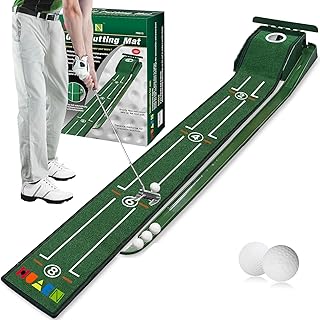
Another great way to improve your speed control is to use a putting mat, like the one available at Golf Putting Mat →. This mat allows you to practice your putting in the comfort of your own home, and it provides a consistent and smooth rolling surface that will help you develop your touch and feel. Plus, it's a lot of fun, and it's a great way to spend some time practicing your putting without having to go to the golf course.
As the great golfer, Jack Nicklaus, once said,
"The key to good putting is to develop a consistent tempo and speed, and to be able to adjust that speed to fit the situation."And, I think that's really true. I mean, if you can develop a consistent tempo and speed, you'll be able to make more putts, and you'll be able to control the ball better. So, let's focus on developing that consistent tempo and speed, and see if we can't become better lag putters.
Practice Drills for Lag Putting
Now, let's talk about some practice drills that can help you improve your lag putting. One of my favorites is the old "circle drill". You set up a series of balls in a circle around the hole, and then you try to make each one from a different distance and angle. It's a great way to practice your alignment, speed control, and touch, and it's a lot of fun.
Another great drill is the "gate drill". You set up two balls on either side of the hole, and then you try to make a putt through the "gate". It's a great way to practice your alignment and speed control, and it's a lot more challenging than it sounds. I mean, you have to be able to make a smooth, controlled stroke, and you have to be able to judge the speed of the ball perfectly.
And, finally, let's talk about the "ladder drill". You set up a series of balls in a line, with each one a little farther away from the hole than the last. And, then, you try to make each one, starting with the closest and working your way out. It's a great way to practice your speed control and touch, and it's a lot of fun. Plus, it's a great way to challenge yourself, and to see how far you can make a putt.
As the great golf instructor, Butch Harmon, once said,
"The key to good practice is to make it fun and challenging, and to always be looking for ways to improve."And, I think that's really true. I mean, if you're not having fun, you're not going to want to practice, and if you're not challenging yourself, you're not going to get better. So, let's make practice fun and challenging, and see if we can't become better lag putters.
Equipment for Lag Putting
Now, let's talk about some equipment that can help you improve your lag putting. One of the most important things is a good putter. You want a putter that feels comfortable in your hands, and that allows you to make a smooth, controlled stroke. And, you also want a putter that has a consistent roll, and that will help you judge the speed of the ball.
Another great piece of equipment is a putting mat, like the one available at Golf Clubs on Amazon AU →. This mat allows you to practice your putting in the comfort of your own home, and it provides a consistent and smooth rolling surface that will help you develop your touch and feel. Plus, it's a lot of fun, and it's a great way to spend some time practicing your putting without having to go to the golf course.
And, finally, let's talk about balls. You want to use high-quality balls that will roll smoothly and consistently, and that will help you judge the speed of the ball. And, you also want to use balls that are designed specifically for putting, because they will have a softer cover and a more consistent roll.
As the great golfer, Tiger Woods, once said,
"The right equipment can make a big difference in your game, especially when it comes to putting."And, I think that's really true. I mean, if you have the right equipment, you'll be able to make more putts, and you'll be able to control the ball better. So, let's invest in some good equipment, and see if we can't become better lag putters.
Stats and Trends for Lag Putting
Now, let's take a look at some stats and trends for lag putting. According to a recent survey, the average golfer three-putts about 25% of the time. And, that's a lot. I mean, if you can reduce your three-putts by just 10%, you'll be able to shave a few strokes off your score, and that can make a big difference.
Another interesting stat is that the majority of golfers (about 60%) use a conventional putting stroke, while about 30% use a belly putter, and about 10% use a long putter. And, that's interesting, because it shows that most golfers are still using a traditional putting stroke, but there are some who are experimenting with different styles.
And, finally, let's take a look at some trends in lag putting. One of the biggest trends is the use of technology to help golfers improve their putting. I mean, there are all sorts of devices and tools available that can help you practice your putting, and that can provide feedback on your stroke and speed. And, that's really cool, because it can help golfers of all levels improve their game.
As the great golf instructor, David Leadbetter, once said,
"The key to good putting is to stay up-to-date with the latest trends and technology, and to always be looking for ways to improve."And, I think that's really true. I mean, if you're not staying current, you're going to fall behind, and if you're not always looking for ways to improve, you're not going to get better. So, let's stay current, and let's always be looking for ways to improve our lag putting.
Conclusion and Final Tips
So, there you have it, folks. Lag putting is a crucial part of the game, and it's essential to develop the skills and techniques necessary to become a good lag putter. I hope these tips and drills have been helpful, and I hope you've enjoyed this article. Remember, practice is key, and the more you practice, the better you'll get. So, get out there and start practicing your lag putting, and see if you can't become a better golfer.
And, finally, let's talk about some final tips for lag putting. First, always take your time, and make sure you're aligned properly before you make your stroke. Second, use a smooth, controlled motion, and try to make a consistent tempo and speed. And, third, always practice, and stay current with the latest trends and technology.
As the great golfer, Arnold Palmer, once said,
"The key to good golf is to always be practicing, and to always be looking for ways to improve."And, I think that's really true. I mean, if you're not practicing, you're not going to get better, and if you're not always looking for ways to improve, you're not going to stay ahead of the game. So, let's practice, and let's always be looking for ways to improve our lag putting.
And, that's it for today, folks. I hope you've enjoyed this article, and I hope you've learned something new. Remember, lag putting is all about technique, speed control, and practice, so make sure you're focusing on those areas, and you'll be well on your way to becoming a great lag putter. Thanks for reading, and we'll see you on the course.
⛳ Related Gear
Gear worth checking out for mid-handicap golfers: